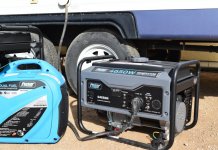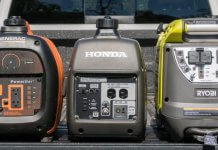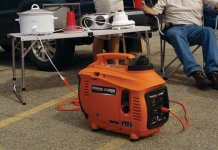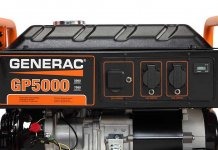

Whether you’re a survivalist, adventurist or a just an avid camper, then you should know the importance of a portable generator for survival. A portable generator is a perfect answer to all your off-grid power needs, and as someone that spends a lot of time away from home, it’s important for you to have the best generator for survival at reach. Apart from being an excellent source of power for outdoor recreation, a survival portable generator can as well be a lifesaver for emergency situations and unforeseen circumstances that could leave your home powerless for several days.
Regardless of the precise situation, we have all been in a circumstance that left us in a dire need of a power generator before. However, power generators have a tendency of requiring a type of energy input to transform to electricity, which usually means carrying around many gallons of kerosene, gasoline or firewood – simply put, an inconvenience and a major cut in portability. But how do carry all these along with a generator as a survivalist? That’s why there are different kinds of portable generators available on the market.
However, it can be hard telling the difference between different kinds of portable generators on the market. So, we have created this guide to help narrow things down and look at the best portable generators out there. If you’re a survivalist who is worried about the excessive weight of regular generators, you’ll find this guide really useful. Apart from reviewing some of the best portable generators for survival on the market, we have also included some useful buying tips to help buyers make the right choice.
What Should Be the Generator for Survival?
When you’re shopping for the best small generators for survival, there are some unique attributes you must look at.
Small, compact, portable
First of all, a survival generator must be small, compact, and portable. A survival generator should also have wheels so that moving it from one place to another won’t be a problem. Nobody wants to be carrying a heavy generator in a survival situation, the weight of your generator might just make all the difference.

Quiet Generator for Camping
Of course, you don’t want to attract wild and dangerous animals while camping, which explains why you must opt for the quietest generators for survival. Besides, since most people tend to go camping to get some quietness, having a loud generator around just doesn’t make any sense.
What Should You Look for When Buying a Survival Generator?
Price
If you are looking to buy a good survivalist generator, you must be ready to spend nothing less than one thousand dollars. They are complex machines, which is they are so expensive. In an emergency situation, when you are warm and safe with your gadgets charged, you will not even think about the price. Some stores and sites selling these generators often offer convenient payment plans, so that you won’t have to drop all the money at once. The cost of the generator depends on the capabilities and type you need also.
Reliability and Durability
There is really no point in having a survival generator if it is not reliable and durable. In order to make sure your survival generator is reliable and durable, take a look at the track record of the manufacturer.
Warranty
Warranty is always a very important factor when buying anything, electronics in particular. Therefore, ensure the survival generator you are looking at comes with a good warranty. While most generators on the market come with a warranty, there are still some that do not. So, don’t take our words for it and check the warranty terms before paying for your survival generator.
Solar batteries – The quietest way
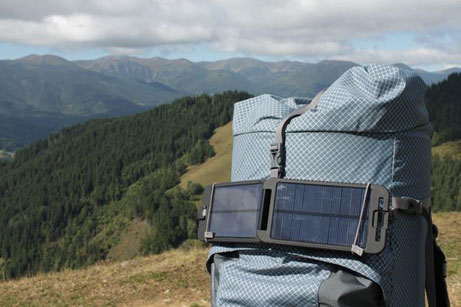
Renogy 100 Watt 12 Volts Starter Kit
Renogy is a company that offers an excellent blend of performance and price with their new portable solar panel kits. The Monocrystalline kit is reasonably priced and designed specifically for people who are new to solar power. The kit is perfect for off-grid applications like trailers, boats, RVs, cabins, and sheds – offering several advantages and containing every element required to enlarge your current system. The starter kit includes everything you require; a Renogy 100W 12V Solar Panel, an adapter kit, cables, a charge controller and brackets.
The solar panel includes new exciting updates that enable expansion on the system to up to 400W under perfect conditions or situations. If the device is set up early on a bright and sunny day, you will be able to generate about 500WH every day. This is sufficient to completely charge a 50 AH battery out of 5% in just 3 hours. Unlike several solar panels, this model from Renogy has extraordinary in low light situations.
Furthermore, the solar panel has what is widely considered as the best layout on the market and is capable of generating a remarkable amount of power which can help you run your campervan or RV effortlessly.
Pros
- Durable construction.
- Great value for money.
- Lightweight and easy to install.
- Fully self-powered off-grid systems.
- High modules conversion efficiency.
- Great performance in low light.
Cons
- The MC4 connectors are hard to unhook.
- Doesn’t come with a battery.
Solar Battery Maintainers
- If you do not require a portable solar panel to charge your RV’s batteries while camping, a solar system may still be required for charging whilst your RV is parked. A solar battery maintainer can be used to charge your RV house batteries when parked and you are unplugged from shore power. Your RV’s batteries always diminish slightly when unplugged from shore power, so the batteries will drain over time except you have a way to maintain the battery.
- Solar battery maintainers come at different prices and several power outputs. Keep in mind that less expensive battery maintainers are likely to have low wattage panels that may be unable to maintain your RV’s battery when fully charged, or they may come with an inexpensive solar controller that is not smart can is capable of damaging your batteries.
- A solar battery maintainer is not designed to charge an RV battery that is totally down. You need to make sure that your RV battery is charged fully before utilizing the solar battery maintainer since it is made to maintain the charge of a battery only.
- While we probably don’t need to say this, we will still say it regardless. A solar battery maintainer will work only if you store your RV outside. If you’re lucky enough to be able to store your rig in a covered place, it will be tucked away safely out of the sun where solar will not benefit you in any way.
Solar Panel Extension Cables
One advantage of portable solar panels over rooftop-mounted panels is that they can be positioned in an area that has full sun. if you want to do this, you need to have a power cord that is a bit longer than the standard one that comes with the portable solar panel. Keep in mind that you can buy extension cables.
The most commonly used extension cables come with MC4 connectors on every end. These MC4 connectors usually come with Renogy solar panels.
Easy Portable Solar Panel Hold Down
Camping portable solar panels are put on the ground where high winds can affect them. Winds hitting the panel’s front are usually deflected over and up and do not cause any problem except they are really strong. Winds hitting the panel’s back, however, can flip them over easily and cause costly damages. Luckily, it is easy to install a solar panel hold down that stops wind damage.
For portable solar panels that come with a Renogy-style leg design, a 5-gallon portable water jug and a metal fence post will be required. The metal fence post is placed on the legs while the filled 4-gallon collapsible water jug is placed on the metal fence post. What you have in the end is around pounds of water securing the solar panel. A lot of avid campers use this set up to hold down their portable solar panels to prevent wind damage. The system is very effective, even in some really extreme winds.
If your portable solar panels, however, comes with Zamp-style leg design, you will require only the 5-gallon collapsible water jug, which will go over the horizontal support of the keg. You will not require the fence post since this leg design comes with its own inbuilt horizontal support which you can easily put the water container over.
Types of Solar Panels – Poly vs. Mono
A portable folding solar panel comes with either one of the two kinds of solar cells: monocrystalline or polycrystalline. The solar cells are the most important part of a solar system – the solar cells are the panel’s dark face that directly points to the sun and convert sun energy into electricity.
The main difference between monocrystalline and polycrystalline solar cells is how they are built, which causes one type to be costlier, but a lot more efficient. Polycrystalline types are the less expensive of the two types, are a bit less effective than monocrystalline cells, and comprise of several silicone fragments that are dissolved to form a larger wafer. Monocrystalline solar cells are made using a single ingot of silicone, are generally smaller in size for the same wattage of polycrystalline cell system, and individual monocrystalline solar cells have a particular square with an appearance of cut-off corners.
A polycrystalline solar cell is somewhere in the region of 13 to 16 percent efficient. A monocrystalline solar cell runs in the region of 15 – 20 percent efficiency. Not a lot of difference. Most high-quality portable solar panels are produced using monocrystalline solar cells due to the higher efficiency of a monocrystalline cell system, which makes it smaller in size overall. As a result of this, they are fairly handy you need to carry it around.
Poly solar cells:
- Less expensive than a monocrystalline cell system
- Comes in color blue
- Larger size than a similar monocrystalline cell system
- Less efficient than a mono-cell system.
Mono solar cells:
- More efficient than a polycrystalline cell system.
- Smaller size than a similar polycrystalline cell system.
- Comes in color black.
- More expensive.
Patriot Power Generator – best survival kit
The Patriot Power Generator is an incredible portable generator produced using cutting-edge materials and comprising of a light, but the solid power source. Weighing just 38 pounds and featuring folding solar panels and lithium iron phosphate battery, the Patriot Power Generator is not only an efficient choice to power an entire home but also adequately light for easy movement. So, it’s always ready whenever you need to carry it along to somewhere.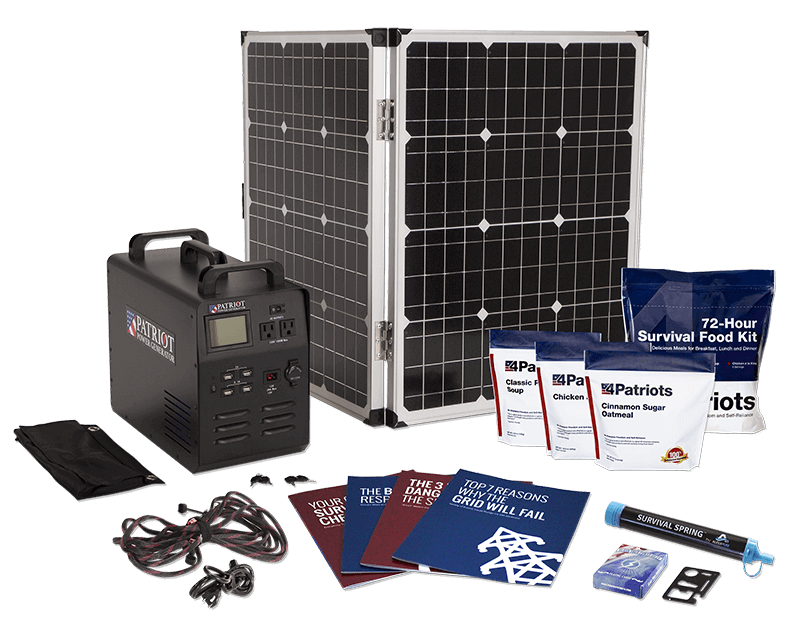
While there are lots of options when it comes to solar panels on the market nowadays, the Patriot Power Generator has proven time and time again to be superior. And it also has an incredible value for money. With its competitive price range and efficient nature, the Patriot Power Generator is one of the best generators for survival and is the ideal option for people in search of a generator to protect themselves and their favorite people when there is electricity failure or in survival situations.
Wegner 10-Watt Portable Solar Generator
There is no reason to give darkness a chance again since you can now find the Wegner 10-Watt Portable Solar Generator everywhere. This generator is actually one of the best solar generators for survival. It comes with 4 rechargeable batteries, a solar panel, a multifunction table, a power cable, a remote control, a user manual, and 3 LED lamps. The usability is enhanced with the included remote control while the manual directs you on how to operate the generator. This unit can be charged either via an AC outlet or via a solar panel.
Furthermore, the long-lasting battery of the unit has a lifespan of more than 10,000 hours, and it’s rechargeable to give you the needed reliability. While the Wegner Solar Generator isn’t big in size, it is very powerful for its portable size. The board is very vital and self-controls the battery even in low-light situations. When the battery is charged completely, it provides adequate energy to small gadgets. It works efficiently with tablets, camera, LED light, PDAs, and more.
Pros
- Easy to set up.
- Comes with an SD card reader.
- Batteries will last 10,000 hours.
- It comes with a solar panel.
Cons
- The unit is unreliable.
- Isn’t worth the price.
POWERADD 100W Solar Charger
The Poweradd Solar Charger is a very efficient folding solar panel. weighting just 4.3 pounds, this portable foldable solar panel charge is perfect for any device, including Samsung, Apple, GoPro, Asus, Acer, HP Dell, Lenovo, Notebooks, Toshiba, and a lot more.
Additionally, the solar panel charger is very easy to charge. It comes with two USB ports, which makes it easy to charge more than one device at the same time. The design of this charge is a lot better than other regular folding solar panels. Also, it features an advanced construction and is produced using the most recent technology. In addition, the generator is water resistant, which means you don’t need to worry when traveling with this solar panel charger during the rainy season.
Pros
- Easy to carry
- Water resistant
- Durable and reliable
- Heavy duty construction
- Unique design
Cons
- No cons.
SUAOKI 60W Solar Charger
The SUAOKI 60W Solar Charger is a very efficient panel that generates a lot of energy. It landed a spot on our list based on merits. The generator utilizes an enormous 9 panels to generate a total of 60 watts. These panels are very powerful and they have a maximum efficiency rating of 25 percent. There are not many solar panels with a conversion rate as high as this.
Since the SUAOKI Solar Charger generates lots of energy, it’s capable of charging nearly anything thrown at it. It can even charge most laptops, speakers, phones, laptops, and more. Additionally, this solar charger comes with a cord that enables you to charge your vehicle battery.
Furthermore, the SUAOKI comes with 2 output ports for charging. These ports include an 18V DC port and a 5V USB port. Both ports enable you to charge pretty just about anything electronic in almost the same time an AC outlet takes. Moreover, the SUAOKI Solar Charger utilizes a TIR-C technology to get the most possible efficient charge.
Pros
- High powered
- Extremely quick and efficient power source
- Great waterproofing
Cons
- Not portable.
- A bit costly.
Wind generators – A way that does not suit everyone
The appearance of the first wind generators
Wind power was being utilized in Iran as far back as 900 AD. A mathematician and an engineer, Hero of Alexandria, was one of the first people to actually power an engine through the wind. In the seventh century, the first wind power plant was built in Sistan, the region of Iran, albeit on a somewhat larger scale. The windmills utilized were of the “Panemone” type, which featured vertical axles, which had long vertical shafts. The long vertical drive shafts featured rectangular blades and the windmill for power. The first wind generator, however, was a wind turbine that had a battery. It was used by James Blyth in 1887 to illuminate his home in Scotland.
Types of devices
- Linear Induction Generators
- Claw-pole Generators
- Switched Reluctance Generators
- Brushless DFIGs Generators.
Wind turbines (generators without blades)
Wind turbines are wind power generators as well but the difference is that they don’t come with blades. There are two categories of wind turbines:
- Horizontal-axis Wind Turbines: This is the most commonly used type, and the axis of the revolving turbine is corresponding to the ground in it.
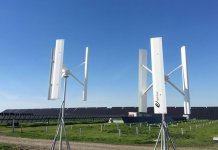
- Vertical-axis Wind Turbines: This type is not as popular as the first type because of its inefficiency. the axis of the revolving turbine here is vertical to the ground.
The Principle of operation of wind generators
The wonder behind how a wind generator operates is relatively clear. The blades of the turbine are turned by the blowing wind which then rotates the generator’s shaft. This rotation, therefore, produces electricity.
Portable wind generators
Benefits
- They are very compact and easy to take anywhere.
- Wind generators utilize a renewable source of energy which makes free and clean.
- The fuel is free.
- No toxicity is produced.
- It can be installed anywhere.
- The operation is free.
Disadvantages
- Expensive installation cost.
- Wind can’t be predicted.
- Wind turbines are quite noisy and animals are endangered.
Value for the use of wind generators
Are wind generators really worth the expensive cost? This is the question that usually lingers in the minds of potential buyers. If you are in search of efficient and free generators for survival, then you can’t look past them. Apart from the noise they generate, they don’t really have any other big con. You can even pack them and take with you on your camping trips.
VEVOR Wind Turbine 300W DC 12V Spiral Wind Turbine Generator
The VEVOR Wind Turbine is rated at 300 watts for 12-volt batteries. It is one of the most popular entry-level models thanks to its fairly small size and the fact that it comes with a hybrid controller. Also, its reasonable price makes it appealing to buyers.
Furthermore, the wind turbine generator is lightweight which means that it required just a little wind to turn and produce energy. It begins at only 2.5 meters per second and runs with little noise or vibration.
While the turbine comes with a hybrid controller, the controller is of low quality compared to the turbine. The hybrid charge controller is not properly equipped to handle low-wind situations. So, if your area’s wind levels are minimal, then you would require a better model.
Pros
- Reasonably priced.
- Durable construction.
- Fairly powerful.
- Aluminum alloy blades.
Cons
- Poor charge controller.
Makemu Energy Micro Home Vertical Axis Wind Turbine Power Generator
Producing free and clean energy wind the wind, the Makemu Energy Micro Home Wind Turbine Power Generator has unique features that make it stand out from other wind power plants. Most wind turbine plants usually have the problem of limited powers, which is not the case with this turbine generator from Makemu. For home use, no other wind turbine generator is better than this vertical axis wind turbine due to the fact that it captures then wind from every direction and doesn’t require orientation. It has a compact size, is elegant and beautiful, and has a quiet operation.
Pros
- Affordable.
- Portable construction.
- Beautiful and elegant.
Cons
- Very poor performance.
Water power generator – The easiest of all
Estream: Portable power generator
Always have power with you on your trips with the Estream Portable Water Power Generator. Since it relies on nothing but Mother Nature, this portable but easy to use power generator converts any kind of moving water into storable energy. with a USB port incorporated, this generator from Estream can charge a wide range of devices including a tablet, smartphone, GPS device, and more.
Furthermore, the Estream Portable Power Generator is capable of folding into a smaller form until you are ready to utilize it. When you have a need for power, just place the generator in moving water. The water will move the turbine which will the generate energy. Afterward, the inbuilt battery collects and stores the energy until it’s needed. With adequate energy storage for up to 3 smartphone batteries, this portable generator is a necessity for every adventurist.
Pros
- Converts any kind of moving water into stored energy
- Charges any USB devices.
- Fits in any size backpack.
- Modular designed to multiple application.
Cons
- Useless without a moving water.
Fire generator – The most unusual solution
BioLite Fire Charge
With an innovative and smart design, this powerful Biomass Stove gives a lot of promise. Apart from its capability to cook food, you can also use it to charge devices, thereby removing the need for carrying fuel. Besides, it will do all of these without producing smoke at all.
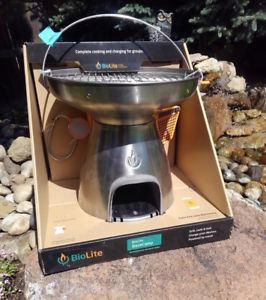
The design of the BioLite Wood Burning Camp Stove is fairly innovative. Nothing like the regular camp stoves, the BioLite Stove operates through thermoelectric technology. With this technology, the stove can recycle some quota of the fire efficiently – produced from wood burning heat – and then convert the generated heat into electric power.
This electric power runs the inbuilt fan, which helps to stimulate the fire with oxygen. However, the greater bit of the electricity powers the USB port, where your little devices like mp3, camera, smartphone, and more can be plugged.
Pros
- Charges electronic devices
- Efficient at boiling water
- Little smoke created vs. comparable wood burners
- Little soot left on pots and pans
- Optional grill accessory is effective.
Cons
- Persistent fire stoking is needed to provide the maximum charging capacity.
- Weightier than most wood stoves.
- Phone charging can take a prolonged time.
Conclusion
Everybody may have one or two flashlights or a couple of candles around, but these won’t be enough for survival situations. Light is not everything, of course. Don’t you want to keep your gadgets working? Or don’t you want to be able to use your dryer and washer as well? Having a reliable generator for survival is always a good idea. With some excellent small portable generators for survival and some small quiet generators for survival reviewed here, you shouldn’t have a problem choosing one.